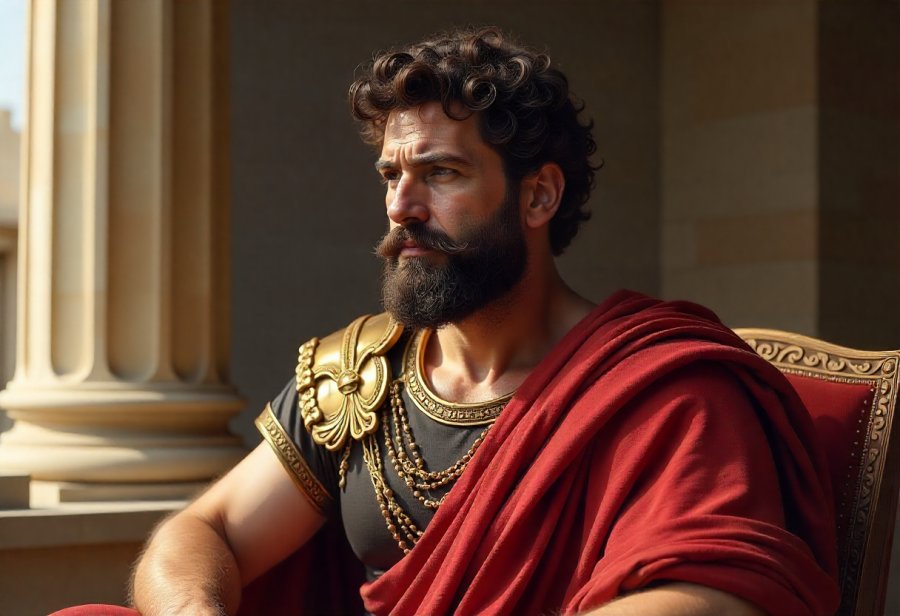
Discover the true story of Cleopatra VII, a visionary leader whose remarkable intelligence, strategic mastery, and political acumen reshaped ancient Egypt amid the rise of Rome. Often mythologized for her beauty and romantic liaisons, Cleopatra’s true power lay in her ability to navigate complex diplomatic landscapes, forge powerful alliances with Julius Caesar and Mark Antony, and maintain Egypt’s independence against formidable imperial forces. Her leadership was a masterclass in perception, blending tradition with innovation, symbolism with cunning, proving that influence stems more from wit and resilience than mere grandeur. As a woman defying gender norms of her era, Cleopatra’s legacy endures as a symbol of strategic influence, cultural savvy, and unyielding determination. Would her story inspire today’s leaders to view influence not just as raw power but as an art of perception and adaptability? Her life continues to challenge our understanding of leadership, proving that true authority resides in the mind as much as in the throne.
Cleopatra’s Enduring Legacy: Power, Diplomacy, and Cultural Influence
Cleopatra VII stands out as one of history’s most fascinating figures, a leader whose influence extends far beyond her time. Often remembered for her beauty and romantic liaisons, her true strength lay in her sharp intellect and strategic mind. She was a master of diplomacy and political insight, skillfully navigating a world dominated by powerful empires. Her ability to forge alliances, outwit rivals, and maintain Egypt’s independence amid turbulence set her apart as a remarkably effective ruler.
Her leadership style combined cultural finesse with political savvy. Cleopatra knew how to use symbolism, religion, and titles to reinforce her legitimacy, blending tradition with innovation. She was not merely a figurehead but a shrewd strategist who adapted quickly to changing circumstances. Her influence was rooted in her capacity to think several steps ahead, transforming threats into opportunities through persuasion and perception.
Cleopatra’s reign coincided with a period of great upheaval. Egypt was a wealthy yet fragile kingdom, caught between internal rivalries and external threats from Rome’s expanding power. Her diplomatic skills were tested constantly as she worked to preserve her sovereignty. Her relationships with Julius Caesar and Mark Antony exemplify her talent for leveraging personal alliances to secure her kingdom’s future, turning them into tools of political resilience.
Her legacy endures because she demonstrated that leadership is more than appearance or power—it’s about intelligence, resilience, and influence. Cleopatra challenged gender norms of her era, proving that a woman could wield significant authority through wit and strategic thinking. Her story continues to inspire leaders and scholars alike, reminding us that true power resides in the mind and the art of diplomacy.
In the broader scope of history, Cleopatra’s influence extends into concepts of leadership, diplomacy, and cultural identity. She exemplified how influence is rooted in understanding people, culture, and perception. Her ability to adapt, negotiate, and project strength through symbols and tradition made her a master strategist. Her legacy highlights that resilience and intelligence are timeless tools of leadership, relevant even today.
Her story is a testament to the idea that influence depends as much on perception as on raw power. Cleopatra’s mastery in projecting strength through religious symbols, titles, and public image reinforced her legitimacy and loyalty among her people. This skill in shaping perceptions played a crucial role in her enduring legacy, demonstrating that effective leadership combines intelligence, cultural understanding, and strategic influence.
Cleopatra’s life reminds us that leadership is a complex blend of influence, adaptability, and insight. Her ability to navigate a hostile world while maintaining her authority showcases her resilience. Her legacy underscores that true power is often a matter of perception—an art she mastered through wit, diplomacy, and cultural savvy. Her story remains a powerful example of how intelligence and resilience can shape history in profound ways.
From Royal Roots to Reign: Cleopatra’s Rise to Power and Strategic Beginnings
Cleopatra VII’s journey to power was rooted in a lineage that had already seen centuries of change and upheaval. Born into the Ptolemaic dynasty, a Greek ruling family established in Egypt after Alexander the Great’s conquest, she was immersed from an early age in a world where political survival depended on sharp wit and strategic maneuvering. Her upbringing emphasized education and cultural fluency; she was fluent in multiple languages, including Egyptian, Greek, and Latin, giving her a distinct advantage in both local and international diplomacy.
From childhood, Cleopatra was keenly aware of the delicate balance of influence and authority within her family. Her father, Ptolemy XII, governed Egypt but faced constant threats from rivals eager to seize control. Growing up amid these rivalries, she learned to read the subtle signals of power—an essential skill for any aspiring ruler. Her early experiences cultivated a deep understanding of how alliances, betrayals, and negotiations could determine her future.
When her father died in 51 BCE, Cleopatra was just 18. She inherited a kingdom that was wealthy and culturally vibrant but also fragile, caught between internal factions and the expanding influence of Rome. Her initial rise was anything but smooth; she faced immediate threats from rivals and internal factions vying for the throne. Yet, Cleopatra’s confidence and political instinct quickly surfaced. She asserted her claim, employing a mix of cultural symbolism, religious authority, and shrewd diplomacy to legitimize her rule.
To reinforce her position, Cleopatra married her younger brother, Ptolemy XIII, a move intended to consolidate power but one that sparked internal conflict. She understood that loyalty from her court and military was vital, and she worked tirelessly to secure it through strategic alliances, religious rituals, and cultural diplomacy. Her ability to navigate these internal dynamics showcased her natural talent for political maneuvering right from the start.
Externally, the looming threat of Rome added another layer of complexity. Recognizing Egypt’s strategic importance, Cleopatra focused on building relationships with Rome’s rising powers. Her education and multilingual skills enabled her to approach foreign diplomats confidently, framing her negotiations around shared cultural and religious symbols. Her early leadership was marked by resilience, balancing internal stability with external diplomacy to ensure her survival and sovereignty.
These formative years revealed Cleopatra as a leader who understood that influence was rooted in intelligence, adaptability, and cultural savvy. Her ability to manage family rivalries, internal factions, and foreign powers laid a foundation for her later achievements. She was not merely inheriting a throne but actively shaping her destiny through sharp decision-making, strategic thinking, and an unwavering focus on her kingdom’s future.
Mastermind of Diplomacy and Defense: Cleopatra’s Strategic Genius
Cleopatra’s strategic genius was the cornerstone of her enduring influence. She was a master diplomat, adept at forging alliances with powerful Roman figures like Julius Caesar and Mark Antony to secure Egypt’s position. Her ability to interpret shifting political currents and respond with nuanced, calculated moves transformed potential threats into opportunities. Whether through diplomatic negotiations, symbolic gestures, or cultural influence, she understood that perception was just as vital as power in maintaining her authority.
Her diplomacy went beyond marriage alliances and titles. Cleopatra leveraged her education, language skills, and deep understanding of Egyptian religion and Hellenistic traditions to craft negotiations that resonated with her allies and rivals alike. This cultural intelligence made her an effective persuader, shaping perceptions to her advantage and reinforcing her legitimacy. Her capacity to adapt her messaging to different audiences kept her steps ahead in complex political arenas.
While diplomacy was her primary tool, Cleopatra recognized the importance of military strength. She didn’t lead armies personally but understood that a loyal, well-deployed force was vital for her survival. She strategically used her navy and troops to defend Egypt’s borders and project strength without unnecessary conflict. Her subtle threats and precise positioning often kept her enemies at bay, giving her leverage in negotiations and internal conflicts alike.
Balancing internal politics with external diplomacy was a hallmark of her leadership. Marrying her brother Ptolemy XIII was a calculated move to consolidate power, even if it sparked internal strife. She employed religious symbolism, cultural rituals, and public displays of authority to reinforce her legitimacy, projecting divine authority that resonated with her subjects and army alike. This blend of political savvy and cultural influence helped her maintain stability amid chaos.
Her leadership was pragmatic yet charismatic, prioritizing internal stability and economic prosperity through trade, arts, and religious patronage. This fostered loyalty among her subjects and enhanced Egypt’s influence in the region. Cleopatra’s comprehensive understanding of governance—merging tradition with innovation—enabled her to build a loyal administration capable of executing her strategic vision and adapting swiftly to changing circumstances.
Throughout her reign, Cleopatra proved that true power relies on wit, influence, and adaptability. Her mastery of diplomacy, military insight, and internal politics allowed her to navigate a hostile world and preserve Egypt’s independence. Her strategic thinking not only secured her longevity as a ruler but also cemented her legacy as one of history’s most clever and resilient leaders.
Alliances and Conflicts: Cleopatra’s Complex Relationship with Rome
Cleopatra’s relationship with Rome was central to her strategy for safeguarding Egypt’s independence amid a rapidly shifting political landscape. Her alliances with Julius Caesar and later Mark Antony were more than personal romances; they were calculated moves to strengthen her position and protect her kingdom from external threats. When Caesar arrived in Egypt during a period of internal chaos, Cleopatra quickly seized the opportunity to align herself with Rome’s most powerful leader. Their partnership was mutually beneficial—Caesar gained a vital ally in Egypt, while Cleopatra secured military support and political backing to solidify her throne. She understood that her survival depended on managing her relationship with Rome’s expanding influence without losing her kingdom’s sovereignty.
Cleopatra approached her alliances with diplomatic finesse, crafting an image of partnership that resonated both domestically and with Roman elites. She used her intelligence, cultural knowledge, and symbolic gestures—such as adopting titles linked to Egypt’s divine traditions—to reinforce her legitimacy and sway Roman perceptions. Her ability to project strength and stability helped her navigate complex power dynamics, even as Rome’s political landscape grew more hostile. Her relationship with Caesar was a delicate balance of negotiation and assertion, allowing her to maintain control while fostering a sense of shared purpose.
After Caesar’s assassination, Cleopatra faced new challenges. She shifted her focus toward building a strategic alliance with Mark Antony, whose ambitions aligned with her own. Their partnership was marked by grandeur and deep mutual influence—she lavished him with displays of loyalty and wealth, while he provided military support and political clout. Cleopatra understood that her alliance with Antony was vital to resisting Octavian’s rising power and safeguarding Egypt’s independence. Their union was not just personal but a political chess move, designed to create a united front against external encroachment.
However, the alliance with Antony drew increasing scrutiny from Rome, especially from Octavian, who portrayed Cleopatra as a symbol of resistance to Roman dominance. As Antony’s fortunes declined and internal conflicts grew, Cleopatra’s position became more precarious. Despite her efforts to portray strength and independence, her reliance on Roman allies ultimately exposed vulnerabilities. Her diplomatic skill was tested as she navigated this treacherous terrain, constantly adapting to shifting allegiances and external pressures.
Throughout her dealings with Rome, Cleopatra demonstrated remarkable strategic insight. She turned potential threats into opportunities, leveraging her relationships to extend her influence and preserve her sovereignty. Her ability to balance persuasion, cultural symbolism, and political negotiation made her a master at navigating empire-building’s complex realities. Cleopatra’s diplomacy was a testament to her resilience and intelligence—she understood that influence was as much about perception as power, a lesson she wielded with finesse until the very end.
A Lasting Impact: Cleopatra’s Influence on Leadership, Strategy, and Culture
Cleopatra’s influence reaches far beyond her lifetime, shaping ideas of leadership, diplomacy, and cultural identity that still resonate today. Her ability to blend intelligence with strategic thinking set a high standard for effective rule in a turbulent era. Modern scholars now recognize her as a pioneer in alliance-building and influence, demonstrating that political power often hinges on wit, adaptability, and cultural savvy.
Her legacy as a formidable leader extends beyond her famed beauty. Cleopatra challenged gender norms of her time, proving that authority could be rooted in sharp intellect and strategic influence. Her story continues to inspire women leaders and strategists, illustrating that influence is born from understanding people, cultures, and perception—traits just as vital in today’s world as they were in ancient times.
Culturally, Cleopatra remains an enduring icon. She is remembered not only as a symbol of seduction but as a leader who exemplified resilience and political acumen. Her ability to project strength through religious symbols, titles, and public image reinforced her legitimacy and loyalty among her subjects. This mastery over perception helped her maintain her authority even amidst external threats and internal upheavals.
Her alliances with Julius Caesar and Mark Antony reveal her mastery in navigating complex international politics. Cleopatra understood that building relationships, leveraging cultural symbols, and making calculated moves could turn threats into opportunities. Her diplomatic finesse allowed her to preserve Egypt’s independence despite the expanding power of Rome, demonstrating that influence often depends on perception as much as raw power.
Throughout her reign, Cleopatra demonstrated that resilience and intelligence are timeless tools of leadership. Her pragmatic yet charismatic approach—fostering trade, arts, and religious patronage—further cemented her influence and stability. She built a loyal administration capable of executing her strategic vision and adapting swiftly to shifting circumstances.
Her ability to read her opponents and respond with subtlety kept her ahead in a world dominated by empire-builders. Cleopatra’s resilience and strategic vision allowed her to outmaneuver larger foes, protecting Egypt’s sovereignty and leaving a legacy of influence rooted in wit and cultural intelligence. Her life underscores that true power is a matter of perception, influence, and adaptability—lessons that continue to inspire leaders today.
In the end, Cleopatra exemplifies that leadership isn’t just about titles or strength but about understanding and shaping perceptions. Her mastery in projecting authority through symbols, language, and cultural influence made her a legend whose impact endures across centuries. Her story reminds us that the most powerful leaders are those who combine intelligence, resilience, and insight to leave a lasting mark on history.